Are You Overfeeding Your Starter?

Many beginners think that if their starter isn't moving, they should feed it more. In reality, the more frequently you feed it, the easier your starter "dies."
If your starter shows two or more of these signs, it's in a sub-health state. Don't rush to add more flour — find the root cause first.
- Too Runny Highly fluid consistency, like thin batter. Lacks structural support.
- Sparse Bubbles Small and few bubbles, loose internal texture.
- Prone to Collapsing Rises briefly then deflates rapidly, leaving a sunken surface.
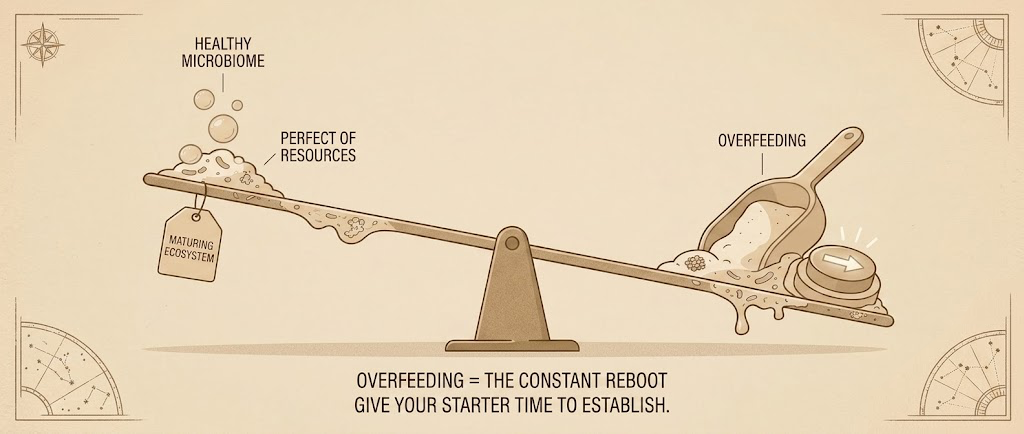
A starter is a mini-ecosystem. Wild yeast produces gas; lactic acid bacteria handle stability and flavor. They need time to find balance.
Frequent feeding forces the environment to reset before the microbiome is fully established — disrupting that balance and decreasing activity over time. In short: feeding too often isn't keeping the starter alive. It's constantly restarting it.
Feed once a day at room temperature while the culture is still establishing.
Store in the fridge and feed once every 5–7 days.
Take it out, let it return to room temperature, then feed it once before use.
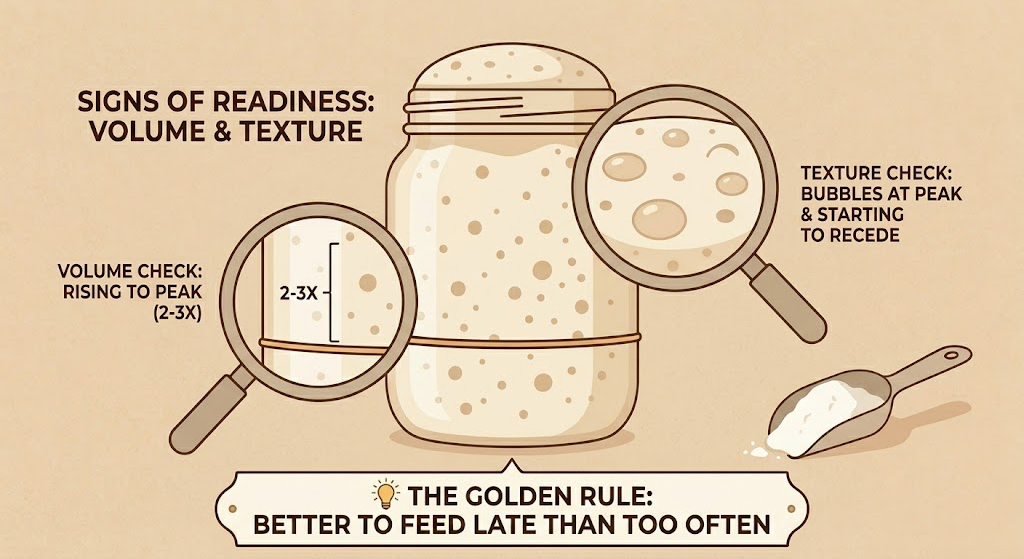
Instead of sticking to a strict clock, watch for these two signals:
Has it expanded 2–3× in size?
Is the surface rich with bubbles and just beginning to recede from its peak?